SCHOOL OF FLOWERS
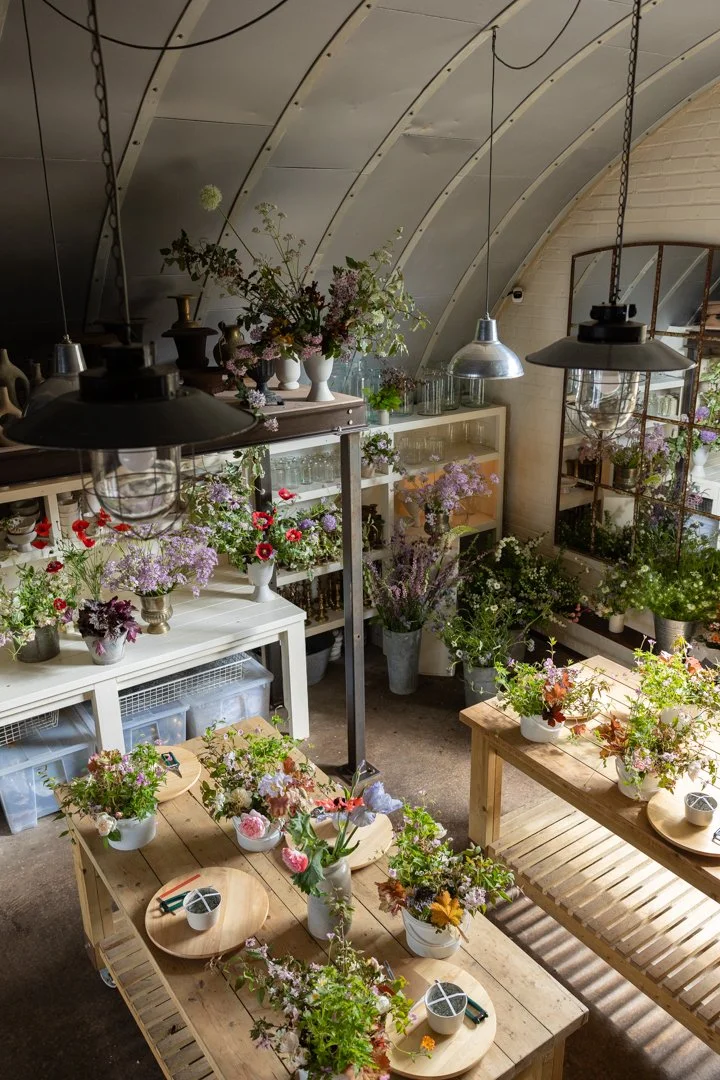
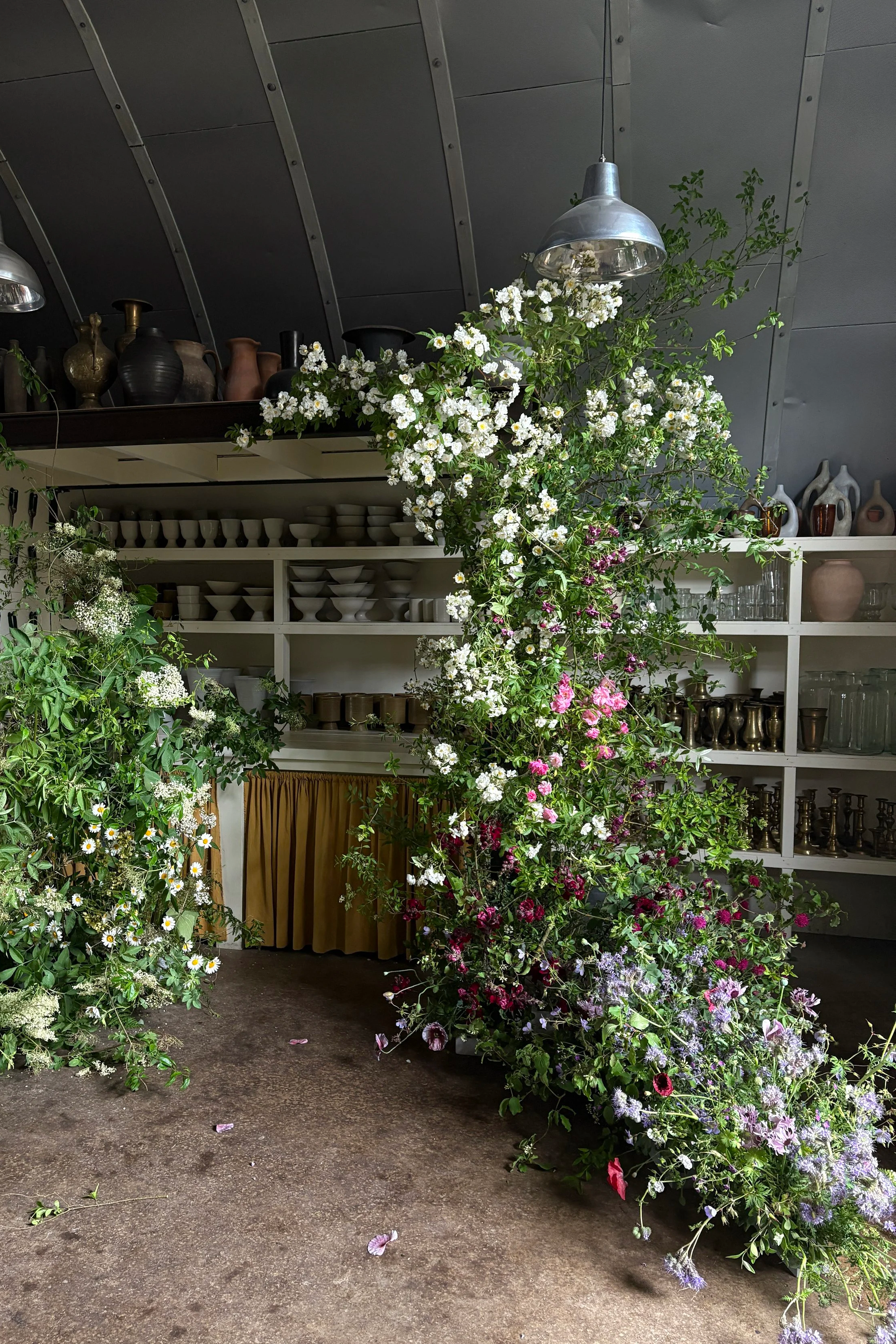
AESME SCHOOL OF FLOWERS specialises in naturalistic design techniques with a philosophy focused on materials and seasonality, celebrating the processes and the rituals of growing and arranging plants.
Every flower arrangement is an expression of its maker, a personal exploration and to this end, a celebration of individuality. But flower arranging is also the expression of shared values and the conduit to a wider conversation. How do we design in harmony with nature? How can we recognise the skills of farmers, gardeners and custodians of the land through our work? How can we connect to the seasons?
Our School offers a fresh perspective for those seeking answers. If you are taking the first steps on your journey with flowers, or you’ve reached a crossroads, we can provide a path to thinking about flowers differently.
By coming to our School you will equip yourself with the tools to approach your design work and creative practice with integrity, depth and direction. Our courses are for enthusiastic beginners, those trained in an alternative style or exploring a transition from another background entirely.
Every student has the opportunity to experience the beauty and variety of garden flowers through their organic forms, textures and colours, to learn about the plants our flowers come from and to reject hierarchy, making arrangements with everything from buttercups to peonies. Whenever you choose to join us, you will be surrounded by extraordinary natural materials - blossoming and decadent, wild and weedy, edible, medicinal and scented.
2026 PROGRAMME
ETHEREAL EVENTS COURSE
6-8 MAY
GARDEN TO VASE WORKSHOP
21-22 May
18-19 June
8-9 OCTOBER
A DAY OF FLOWERS CLASS
28 MAY
BOTANICAL INSTALLATION CLASS
11 JUNE
NATURALISTIC DESIGN COURSE
15-25 SEPTEMBER
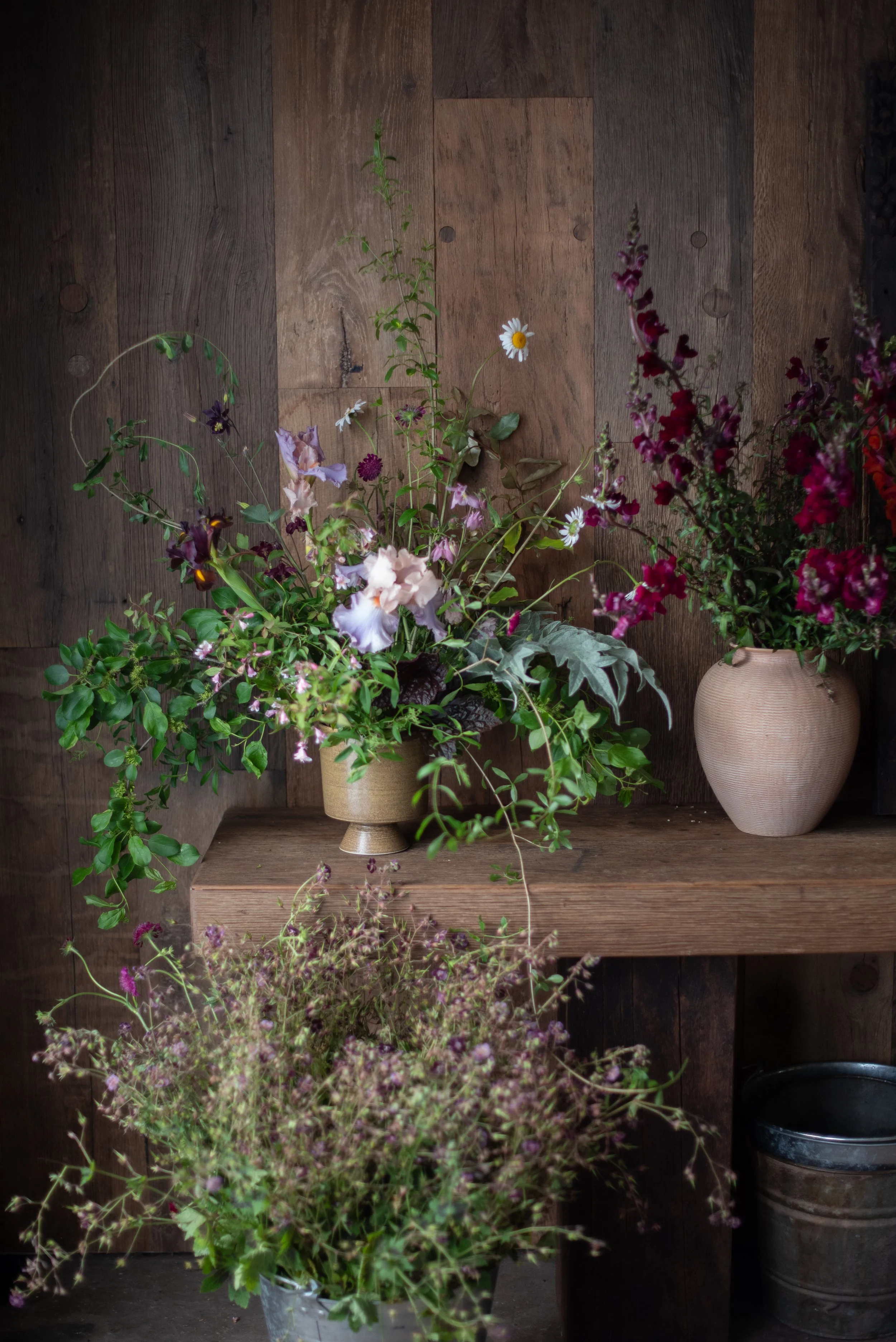
Late spring is a time to explore the soft, nuanced palettes to be found in the garden - creamy yellows, blush, mauve and every shade of green from the glaucous feathers of Phacelia tanacetifolia (earthsmoke) and the variegated fern-like leaves of Polemonium (Jacob’s ladder) to the bronze-tipped Geranium robertianum (herb Robert).
Dawn mist in the Perennial Garden and the exquisite grey-white and lilac tufts of Thalictrum delavayi (Chinese meadow-rue).
Each person who attends a workshop will have their own relationship with flowers, different levels of skill and experience and a personal goal in mind. We sensitively adapt our teaching styles for each guest, starting with the basics of practical techniques (hand-tieds, kenzans, chicken wire) and encouraging individual experimentation with colour, proportion, shape and symmetry.
Our School is first and foremost about connecting plants and people. We only ever use seasonal, locally grown materials (whether in the UK or further afield). You will have the opportunity to experience the beauty and variety of garden flowers through their organic forms, textures and colours, to learn about the plants our flowers come from and to reject hierarchy, making arrangements with everything from weeds and wildflowers to fruits and vegetables.
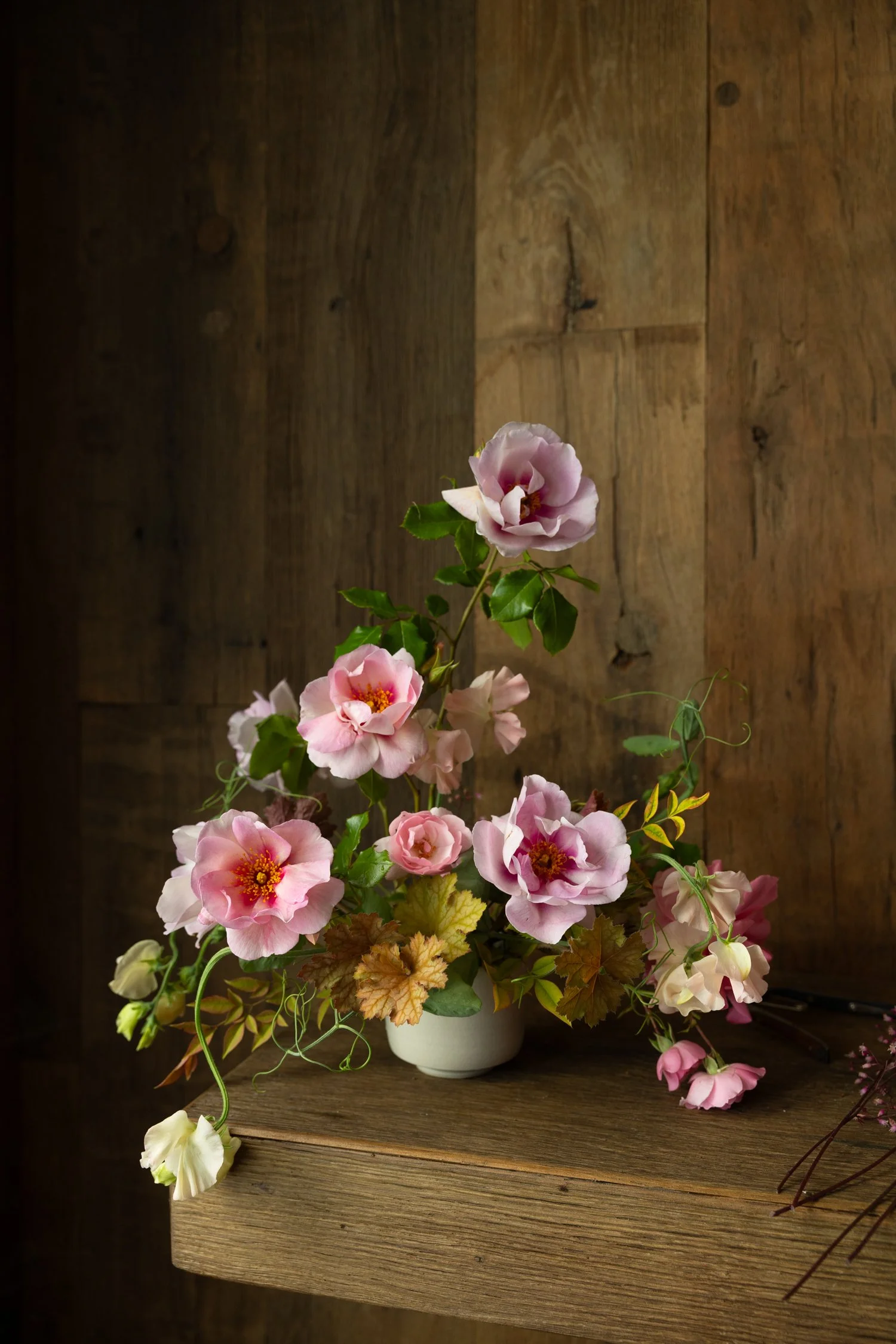
The Cottage Garden in June awash with garden roses and poppies. The planting was inspired by the painterly borders of the late garden designer and writer Gertrude Jekyll. Our favourite rose ‘Munstead Wood’ was named after her Surrey home.
“The workshop was a dream. I had a trying year with lots of questioning and doubt and you really refilled my cup. I am feeling very inspired and a renewed sense of resilience that has been lacking of late. Your passion and commitment to Aesme was really uplifting and left me very hopeful for what's to come.” JACQUELINE
Gathering together to share food, decorating the table ~ this is an ancient ritual. Table flowers are a way to pull at the threads that connect the garden to the vase, the season, the food on our plates to create an enveloping sensory experience.
A late summer centrepiece incorporating edible ingredients from the Kitchen Garden - Sinapsis alba (white mustard), Cicer arietinum (chickpea), Chrysanthemum, Origanum vulgare (wild marjoram) and gleaming Rubus fruticosus (blackberry).
We want every visitor to have an immersive workshop experience. Firstly, through learning - everything from plant varieties, insect life, soil health and compost to design theory, vases, books and resources, tips on working in events and how to photograph arrangements. Secondly, through a welcoming space filled with extraordinary flowers, delicious food, mindful activity and memorable shared encounters with a community of passionate people.